Pull up a home search for Mineola and you'll get a single number back. Depending on the site, it lands somewhere between $1.88 million and $2.24 million, based on recent Mississauga MLS activity. That number sits there looking authoritative, like it describes a place.
It doesn't. Walk east from Port Credit into Mineola and cross Hurontario Street, and you're not touring variations on a theme. You're touring two different housing products that happen to share a name, a school board, and a postal code prefix. One side of that street will sell you a ravine lot behind a 100-year-old tree canopy for north of $3 million. The other side will sell you a 1950s bungalow on a wide lot that's worth more torn down than lived in, for something closer to $2 million. Neither buyer is wrong about what "Mineola" costs. They're just answering different questions.
The Number Blends Two Different Products
The current Mississauga MLS figures for Mineola show an average listing price of $2,239,000 and an average sold price of $1,879,080, with homes moving in roughly 29 days and closing at about 95.4 percent of asking. Those are healthy numbers by any measure. But averages describe a center of gravity, not a range, and in Mineola the range is doing most of the talking.
A single average makes sense in a neighbourhood where the housing stock is roughly interchangeable, where a detached home three streets over looks and sits like the one you're touring. Mineola isn't built that way. The lots themselves are structurally different depending on which side of Hurontario Street you're standing on, and that difference shows up directly in what a buyer is actually purchasing.
The Line Down Hurontario Street
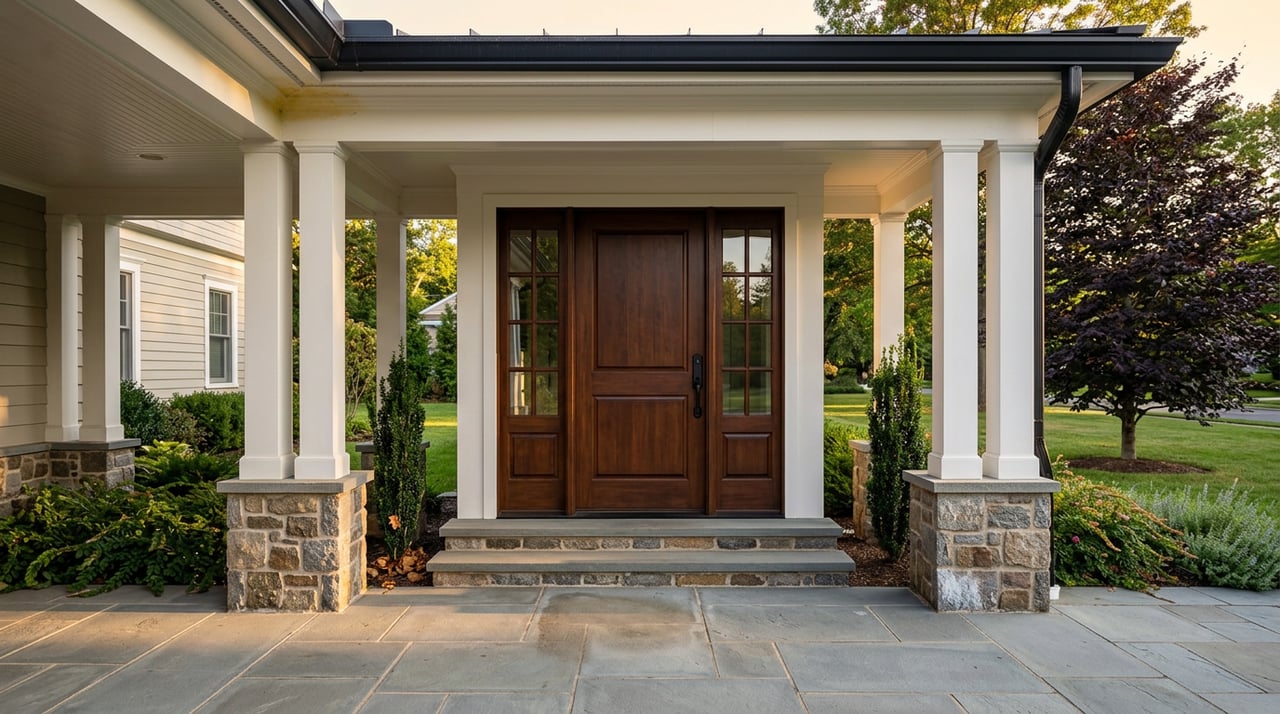
Mineola West is the side people mean when they invoke the neighbourhood's cottage-country reputation. The lots here are irregular, shaped by the ravines they back onto along the Credit River. Streets like Kenollie Avenue and Pinetree Crescent still run without curbs or streetlights, which isn't neglect so much as preserved character. Homes are zoned to Kenollie Public School, and detached properties on this side typically track from $3 million to $8 million or more. What you're buying at that price is largely irreplaceable: a mature ravine lot doesn't get created, it either exists on a given parcel or it doesn't.
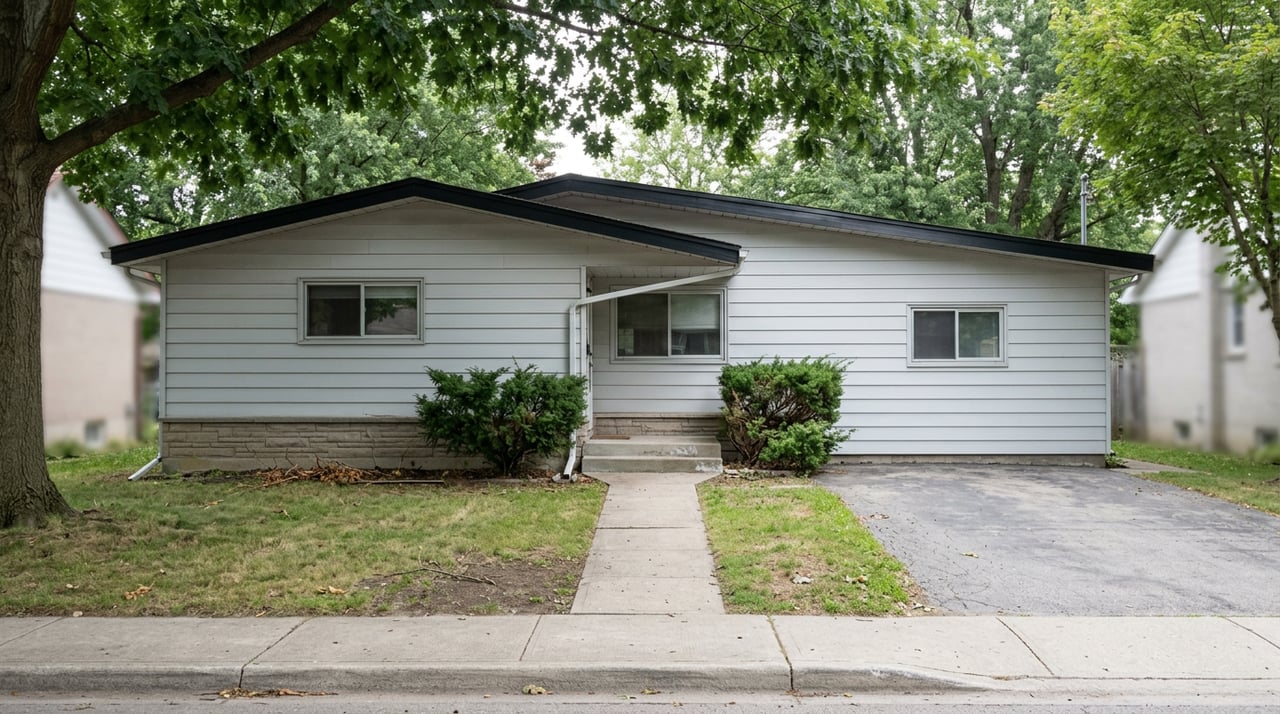
Mineola East is a different market wearing the same neighbourhood name. Lots here are flatter and more rectangular, built out mostly in the postwar decades, and the area is currently the most active bungalow-teardown corridor in the city. Buyers are purchasing original 1950s homes on lots of 75 feet or wider specifically to demolish and rebuild. Detached properties on this side run roughly $2 million to $5 million, a wide band that reflects how much of the price is tied to the land and its buildability rather than the structure sitting on it today.
Here's what that split looks like side by side.
| Mineola West | Mineola East | |
|---|---|---|
| Lot character | Irregular, ravine-backed, along the Credit River | Flat, rectangular, wider building envelopes |
| Typical detached price band | $3M to $8M+ | $2M to $5M |
| School zoning | Kenollie Public School | Varies by street, Mineola Public School catchment nearby |
| Street infrastructure | No curbs or streetlights on many streets | Standard suburban infrastructure |
| What's driving the price | The lot itself, largely fixed in supply | Land value plus rebuild potential |
A buyer comparing that $2.24 million average against a West-side ravine listing will think Mineola is more attainable than it is. A buyer comparing it against an East-side teardown candidate will think they're overpaying for a house they plan to demolish anyway. Both are reading the same average against the wrong half of the market.
Why the Citywide Slowdown Doesn't Reach Here
This matters more right now because of what's happening one level up. Across the Greater Toronto Area, TRREB's July 2026 Market Watch reported an average sale price of $1,003,956, down 4.5 percent year over year, with detached homes averaging $1,291,690, down 5.1 percent. The MLS Home Price Index composite benchmark was off 4.6 percent over the same period. By most measures, the region's detached segment has softened.
Mineola's own recent figures, a 29-day average time on market and a 95.4 percent sale-to-list ratio, don't look like a softening market. Neither does the fact that days on market and pricing here have held up even as broader detached inventory has grown elsewhere in Mississauga.
The mechanism is worth naming directly, because it's the actual answer to "why hasn't Mineola corrected like everywhere else." A citywide price index measures what happens when buyers can substitute one similar home for another across a wide pool. That substitution effect is exactly what drives corrections: when supply loosens, buyers who were competing for a scarce type of home suddenly have options, and prices soften. Mineola's West side breaks that substitution logic because the product isn't substitutable. There is a fixed number of ravine lots backing the Credit River, zoned to a specific school, and that number doesn't expand when the rest of the region's inventory does. Compare that to a neighbourhood like Cooksville, where average pricing runs closer to $989,000 on more standardized housing stock, or even Lorne Park, where averages sit near $2,917,000 but on a more uniform lot type. Those markets move more in step with the citywide trend because the homes within them are easier to compare to each other and to substitutes nearby.
Mineola East is a more interesting case, because on paper the housing stock there (older, smaller, more standard lots) should behave more like the rest of the region. It mostly hasn't, because its buyers aren't shopping it as a place to live in the existing structure. They're shopping the land underneath, and land for a specific kind of custom build in a specific school catchment doesn't respond to the same supply signals as move-in-ready detached inventory does.
The Permit Clock Nobody Mentions in the Listing
For a buyer targeting an East-side teardown, the price is only the first number that matters. The second is time, and it's the one that catches people off guard mid-transaction rather than during the search.
Mississauga's Demolition Control By-law applies to any residential demolition in the city, which means a teardown purchase in Mineola East requires a demolition permit before the existing structure comes down, handled separately from the new construction permit. If the lot's grading or drainage will be disturbed, which is common on these older bungalow parcels, an erosion and sediment control permit is typically required before excavation starts, and depending on the property, conservation authority approval can factor in as well.
On the City's own permit timelines, prescreening for a residential application usually runs 7 to 10 business days, with first review of a complete application taking about 10 business days after that. Tree permit applications, relevant on most Mineola lots given the tree canopy the area is known for, are reviewed within 30 business days when complete. Put together, the average time to issue a permit for a new detached or semi-detached home runs around 13 weeks, and that's before construction itself begins.
Zoom out and a realistic custom build in this corridor runs 12 to 18 months of construction, with another 3 to 6 months of pre-construction work for site assessment, architectural drawings, and arborist reports given the tree protection standards in play. Total timeline from lot purchase to move-in lands somewhere around 18 to 24 months for most projects. That's the number a buyer needs before making an offer on a teardown candidate, not after.
A Few Questions We Get
Is Mineola West always more expensive than Mineola East? On a per-property basis, generally yes, because the ravine lots on the West side are a fixed and irreplaceable supply. But the ranges overlap. A premium East-side lot with strong rebuild potential can outprice a smaller or less distinctive West-side property.
Does the Kenollie Public School catchment affect price on its own? It's one factor among several, alongside lot type and Credit River proximity, that together support consistent demand on the West side. We'd encourage any buyer to verify current school catchment boundaries directly with the Peel District School Board rather than relying on a listing description, since boundaries can be adjusted.
If I'm buying a teardown, when should I start the permit conversation? Before you close, ideally before you write the offer. Site-specific issues like grading, tree cover, and conservation authority overlap are exactly the kind of thing that can turn a straightforward-looking lot into a longer, more expensive project once you're already committed.
If you're trying to figure out which side of this market actually fits your budget and your plans, that's a conversation worth having before you fall for a number on a portal. Corrie Harding-Keizs works both sides of Mineola regularly, along with the neighbouring Port Credit, Lorne Park, and Cooksville markets, and can walk you through what a given price actually buys on the ground. Request a personalized market consultation and we'll help you read the number correctly before you act on it.